Start with the room and the job
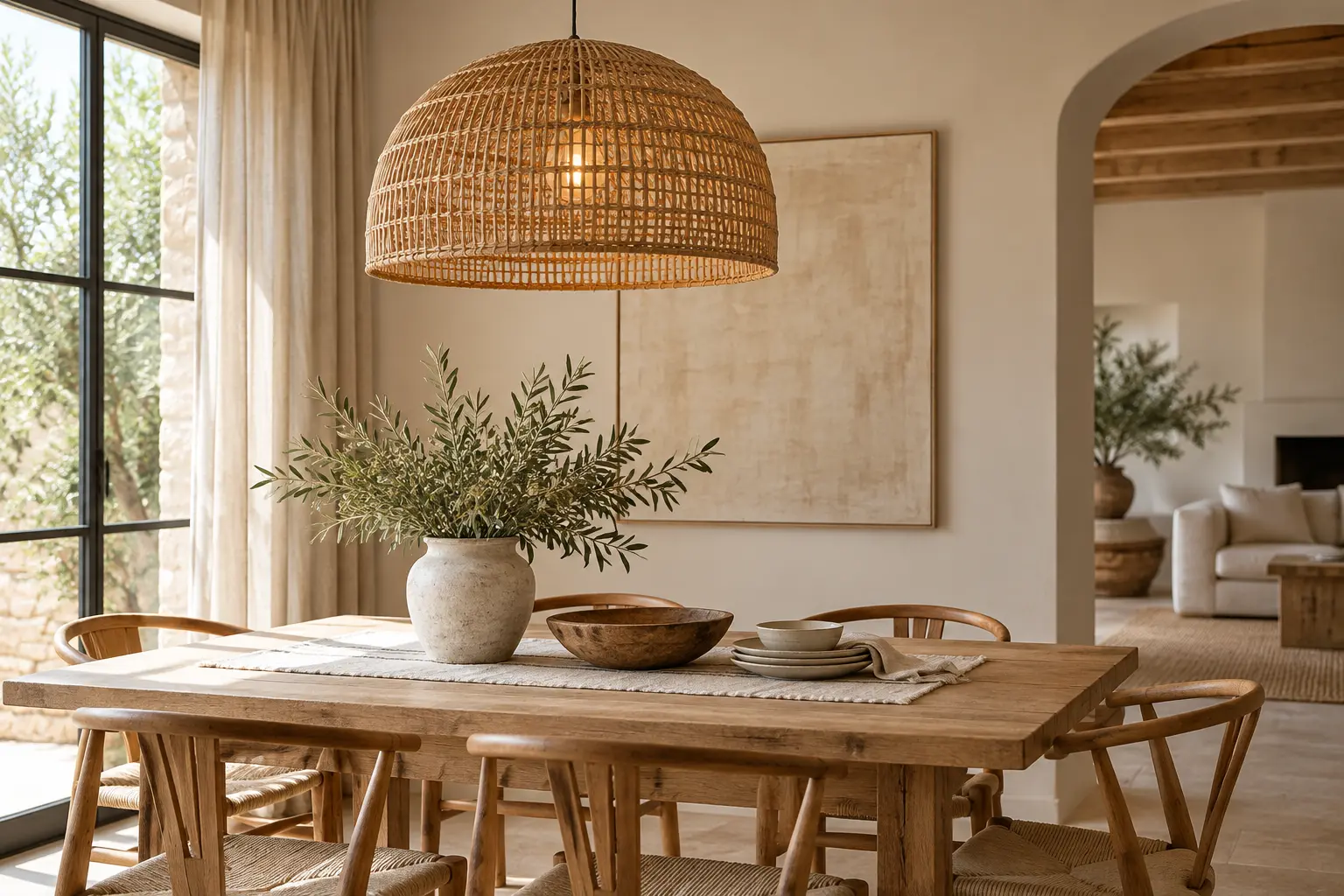
Rattan pendant lights are decorative fixtures with a useful secondary effect: the woven shade filters light and creates a pattern on nearby surfaces. That can make a dining area or seating zone feel warmer, but the weave does not automatically provide even task lighting. Decide whether the pendant is meant to light a table, define an island, soften a corner, or serve as a visual focal point.
Mark the furniture footprint and the ceiling point before comparing shades. A pendant that looks delicate in a catalog can dominate a small table, while a small shade can disappear above a long island. Note nearby doors, tall cabinets, ceiling beams, and sightlines from the entry. Scale begins with the room, not the product photograph.
Choose shade diameter and drop
Compare the outside diameter, height, opening, and total hanging range. A broad drum or basket shade distributes visual weight across a table; a narrow bell shape concentrates the form and may suit a smaller zone. The opening changes how much light travels downward, so two shades with the same diameter can behave differently.
Hanging height should leave comfortable clearance for people using the furniture and preserve the sightline across the room. Adjustable cord or rod length helps, but the ceiling box and canopy still need to sit correctly. If the fixture will hang above an island, account for standing users; above a dining table, account for people leaning forward and carrying dishes.
Understand rattan weave and light distribution
Rattan may appear as a tight weave, open lattice, wrapped frame, or layered strips. A tighter shade hides more of the bulb and produces a softer glow, while an open weave allows stronger points of light and more visible shadow patterns. Inspect close-up photographs for uneven gaps, loose strands, sharp ends, and the way the inner frame is finished.
The material can warm the color of the light, especially with a warm white bulb. That is useful in a dining room and may be less suitable for detailed food preparation or a workspace. Consider a dimmer-compatible LED when the fixture and electrical system allow it. Never choose a bulb only by appearance; check the socket, wattage limit, shape, and manufacturer’s guidance.
Check socket, bulb, and heat details
The socket type, maximum wattage, bulb shape, and included hardware are core specifications. A decorative oversized bulb may not fit through a narrow shade opening. An exposed bulb can create glare at eye level. Confirm whether the shade is rated for the bulb type you plan to use and whether the fixture requires a specific lamp base.
Heat matters around natural fibers. Follow the fixture maker’s instructions for bulb clearance, wattage, and ventilation. LED bulbs generally produce less heat than older incandescent options, but the fixture’s rating controls the decision. If a rattan shade sits close to a bulb, do not improvise a liner or alter the wiring without qualified guidance.
Inspect the ceiling and installation route
A pendant’s weight is carried by the ceiling box and mounting hardware, not by the decorative cord alone. Confirm the fixture weight, canopy dimensions, mounting plate, and whether the existing electrical box is suitable. A new fixture may need a different box, brace, junction, or ceiling repair. These are installation questions, not styling details.
Measure the path from delivery point to the room and inspect the shade before assembly. Natural material can have variation in color and weave, while damage at the edge may worsen during installation. Keep the packaging until the fixture is mounted, tested, and positioned. If wiring is outside your competence, use a qualified electrician rather than treating a ceiling fixture like a plug-in lamp.
Coordinate the pendant with the room
Rattan brings texture and a warm, organic note. Compare its tone with the floor, table, cabinetry, upholstery, and nearby metal finishes. A pale woven shade can keep a dark room lighter; a deeper honey tone may connect with wood and brass. Avoid matching every texture exactly. One clear natural-fiber element can be enough when the rest of the room already has pattern.
The light should support the room after the fixture is off. Consider the silhouette from standing height, the shadow pattern on walls, and the visual gap between shade and furniture. If the pendant is over a dining table, center it on the table rather than the room. If there are multiple fixtures, confirm spacing and the combined visual weight before drilling.
Care, cleaning, and returns
Dust can collect on woven fibers and inside the shade. Follow the maker’s care instructions and use only the cleaning method allowed for the material and finish. A soft brush or low-suction tool may be appropriate, but water, oils, and harsh cleaners can stain or weaken natural fibers. Turn off power and allow the fixture to cool before cleaning.
Before ordering, record shade dimensions, hanging range, weight, socket, bulb limits, cord or rod, canopy, ceiling requirements, finish, delivery, and returns. Inspect the weave, frame, hardware, and electrical components before removing packaging. The retailer’s current installation and return terms govern the exact item, especially when a fixture is marked final sale or made to order.
Final rattan pendant lights checklist
A useful shortlist compares the actual furniture width, shade diameter, shade height, drop, opening, weave density, bulb access, socket, wattage, dimmer compatibility, mounting hardware, ceiling box, care method, delivery route, and returns. A decorative pendant should also leave enough light for the task below it.
The best rattan pendant lights balance material character with safe scale and useful illumination. Choose the shade around the table, the bulb around the socket and rating, and the installation around the ceiling. Confirm the current specifications on the manufacturer or retailer page before purchase.