Match the shelf to the wall, not the photograph
Searches for “shelf floating” usually describe the same practical object: a wall shelf with hidden or visually minimized support. The clean appearance depends on what sits behind the shelf. Drywall over studs, masonry, plaster, tile, and paneling each require different anchors, drilling methods, and load expectations. Identify the wall construction before you choose a shelf. A beautiful board with the wrong hardware is an installation problem waiting to happen.
Use a stud finder or the building information available to you, then confirm the result carefully before drilling. In a rental, the best option may be a lighter shelf, a removable display, or no-drill storage. In a masonry wall, the fastener and drill bit must match the material. If you cannot verify the wall or the shelf will carry heavy objects over a bed, desk, or seating area, the installation decision deserves more caution than the styling decision.
Measure depth, span, and the objects that matter
Shelf depth should follow the largest object you plan to display, with enough front clearance to keep items stable. A shallow shelf can suit framed photographs, small books, or a narrow ledge arrangement. A deeper shelf can hold ceramics and larger books but projects farther into the room. Mark the depth on the wall with painter's tape and walk past it from both directions. This reveals whether the shelf will narrow a passage or sit too close to a door.
Long spans create more visual presence and more structural demand. A shelf that looks delicate may need a substantial bracket behind the board or multiple mounting points. Place the objects on a table first and measure their total length, then leave breathing room at both ends. Do not select a length solely because it fills the wall. The usable composition should leave space for installation tolerances and future rearrangement.
Read the bracket and anchor instructions
A hidden bracket still transfers the load into the wall. Look for the bracket length, rod diameter, number of fixing points, anchor types, and the way the shelf locks onto the support. A small keyhole fitting and a full metal cleat create different installation requirements. The product should provide a clear diagram that identifies the fasteners for each wall type. If the instructions are vague, the advertised load is difficult to evaluate.
Load capacity is conditional. It depends on the wall, fasteners, bracket spacing, shelf material, object distribution, and installation quality. Place heavier items near the support points and keep the front edge from becoming a lever. Check whether the load figure refers to a single shelf, a pair, or a particular wall construction. When the manufacturer provides no guidance, limit the shelf to light display objects and avoid treating it as a bookcase.
Choose material for span and daily handling
Solid wood brings natural variation and can offer a substantial look, though a wide board may be heavy. Veneer over engineered wood can keep the panel stable and consistent. Metal shelves reduce the visual mass of the board, while glass changes the lighting and weight calculation. Compare the shelf's own weight before adding the objects. A lightweight appearance does not mean lightweight installation.
Edges and surfaces affect everyday use. A sharp front edge may be uncomfortable in a narrow hallway. A rounded or eased edge feels more forgiving near a desk or bed. Open grain can collect dust and require careful wiping, while a sealed painted finish may be easier to maintain. Check how the surface responds to moisture and whether the color or grain varies between pieces if you are installing multiple shelves.
Plan spacing around sightlines and maintenance
Shelf spacing should serve the objects, the wall, and the people using the room. Leave enough vertical room for the tallest item plus a little tolerance so that you can remove it without scraping the shelf above. Aligning multiple shelves can create a calm grid, while staggered placement can suit a more relaxed collection. Use paper templates to test the composition before making holes.
Open storage collects dust because every object is exposed. Leave enough room to lift and wipe items without dismantling the whole arrangement. Avoid placing delicate paper, electronics, or moisture-sensitive objects where a sink, shower, or cooking splash can reach them. Near a desk or bed, keep the shelf from becoming a catch-all that encourages overloading. The best wall storage reduces clutter only when its limits stay visible.
Installation access is part of the product choice
A shelf can be technically compatible with a wall and still be impractical to install. Check whether the mounting plate needs a level working area, whether the shelf slides over rods from one side, and whether a nearby corner prevents the required movement. Measure the drill location relative to outlets, switches, plumbing, and wiring. When the wall is uncertain, professional installation may be the sensible route.
After installation, check that the shelf sits level, the board is fully seated, and the fasteners remain tight. Add objects gradually and distribute them across the span. Recheck the shelf after a short period, particularly if the wall is drywall or the shelf is near vibration from a door. Do not hang from the shelf, use it as a handhold, or place breakable objects where a fall would create a hazard.
The floating shelf decision
Before buying, confirm wall type, stud or masonry locations, shelf weight, board dimensions, bracket design, anchor compatibility, published conditional load, object sizes, edge profile, finish, cleaning, return terms, and installation access. Create a paper template for the exact depth and span. This small planning step prevents a common mistake: choosing the most attractive shelf before checking whether the wall can support it.
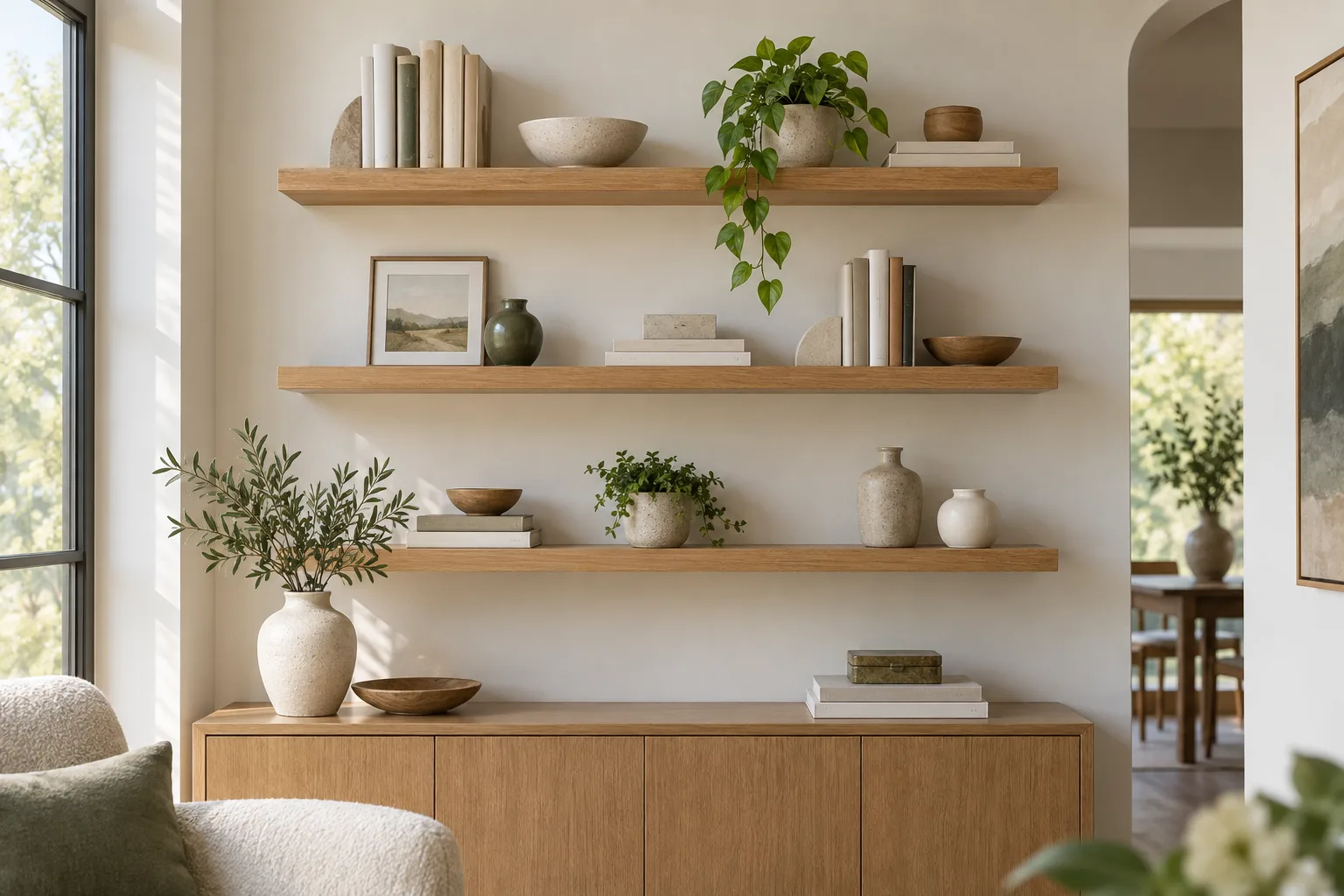
A good floating shelf adds useful vertical storage with a clear visual footprint. The result depends on the whole system: board, bracket, fastener, wall, objects, and maintenance. Choose the depth for the room, the support for the wall, and the load for the installation you can actually perform. That standard produces open storage that remains calm and secure after the first styling session.