
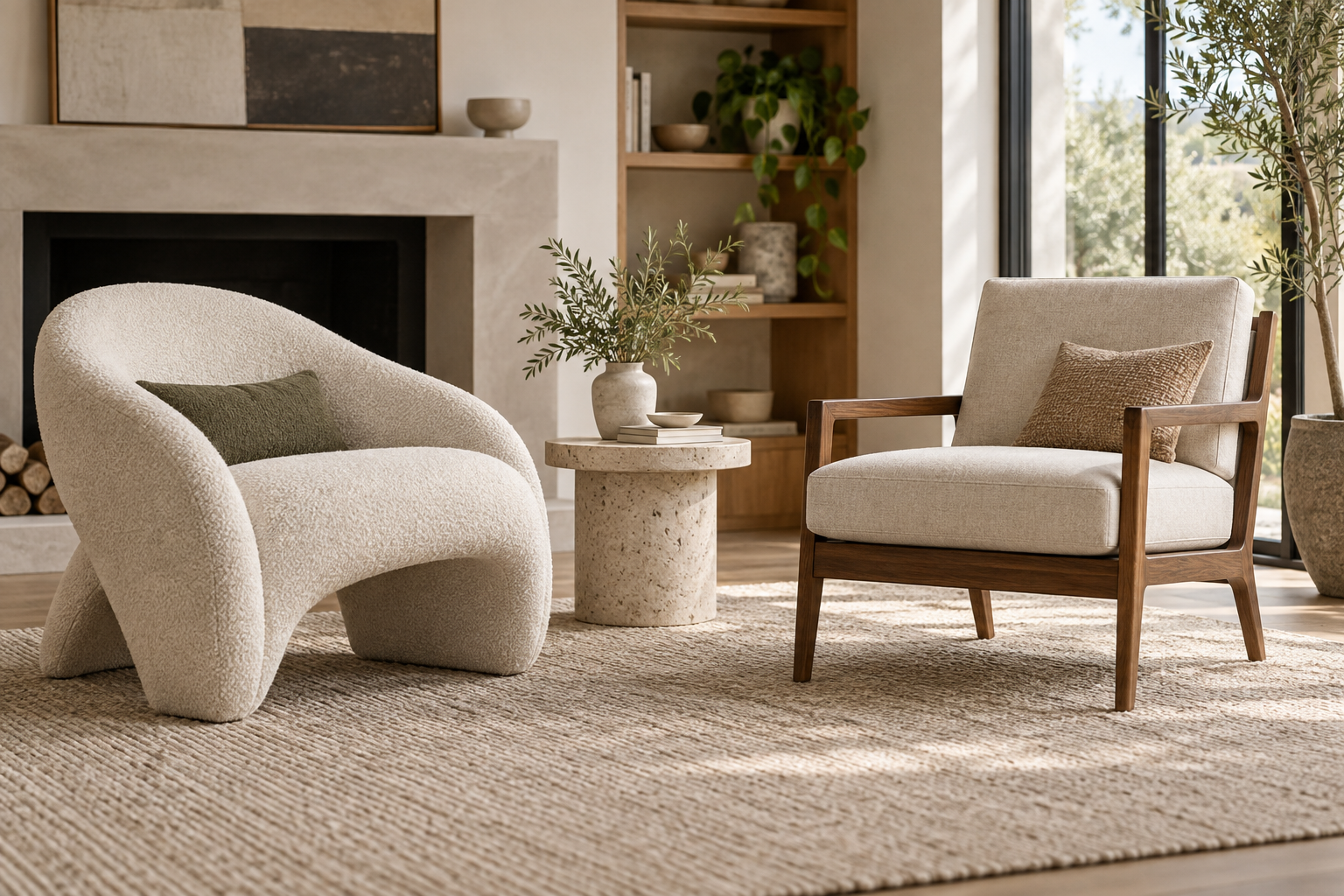
Decide whether the chair is for sitting or composition
A modern accent chair can be a reading seat, a conversation seat, a landing place for a bag, or a visual counterpoint to a sofa. Those jobs have different requirements. A compact sculptural chair may look excellent beside a console and feel awkward after twenty minutes of reading. A deeper lounge chair may be comfortable for long sessions and visually overpower a narrow room. Define the primary use before comparing silhouettes, because the room needs a working seat rather than a decorative object that happens to have legs.
Consider who will use it and how often. A chair in a formal sitting room can prioritize shape and occasional comfort. A chair used daily by adults, children, or guests should be judged by the seat edge, back angle, arm support, and cleanability. If the chair is part of a conversation group, the seat should also face the people and surfaces it serves. Design language matters, though it should follow the movement pattern of the room.
Measure the living footprint around the chair
Product listings usually emphasize width, depth, and height. Your room needs more information: space to pull the chair away from a wall, clearance for knees, the path around the chair, and room for a side table or lamp. Mark the chair footprint with painter's tape and include the arms at their widest points. If the chair reclines, swivels, or rocks, mark that movement too. A chair that technically fits can still block a doorway or turn a useful walkway into a squeeze.
Scale it against the sofa and the ceiling height. A low, broad chair can balance a long sofa and keep a room visually open. A taller wingback or barrel chair can create a stronger vertical anchor. Compare the seat height as well as the outside height; a high frame with a low seat can feel visually heavy and less convenient for standing. Use the dimensions of existing furniture to prevent an isolated showroom effect.
Seat geometry controls real comfort
Seat depth is the first specification to examine. A deep seat may suit a tall user who likes to lounge, while a shorter user may need a cushion behind the back to keep feet grounded. Seat height changes how easily you can sit down and rise. The front edge should not press sharply behind the knees, and the cushion should support the posture you expect to use. A chair can be fashionable and still fail if the geometry asks the body to compensate.
Back shape and arm height add another layer. A curved back can hold the shoulders in a relaxed position, while a straight back may suit upright reading or conversation. Wide arms can feel generous and consume table space. Narrow arms save room but may offer less support. Check whether the seat cushion is fixed or removable, whether the cover can be cleaned, and whether the frame allows normal movement without rubbing against a wall.
Read the frame and upholstery as a maintenance plan
The frame is part of the chair's character and its long-term behavior. Exposed wood can warm a modern room, metal can create a lighter outline, and a fully upholstered shell can feel quiet and enveloping. Look for the information that affects use: leg material, joinery, weight capacity, floor protectors, and whether the chair arrives assembled. A beautiful profile is less useful when the legs scratch the floor or the frame cannot pass through the delivery route.
Upholstery should match the room's actual risks. Textured fabric can soften a hard-edged interior, though its weave may catch pet hair or require careful vacuuming. Leather or coated materials may wipe more easily and show a different pattern of wear. Light colors can work in low-contact rooms and demand faster response to spills. Ask how the fabric should be cleaned, whether the cover is removable, and whether replacement parts are available.
Place the chair so it completes a conversation
A chair should face a purpose. Angle it toward the sofa for conversation, toward a window for reading, or toward a desk or console when it supports another activity. Avoid placing the most dramatic chair where people only see its back unless the back is designed to be displayed. A swivel base can improve flexibility in an open plan, while a fixed chair may feel more grounded in a small room. Use a temporary placement with an existing chair before ordering a shape that changes the traffic flow.
Accessories should support rather than crowd the seat. A small table needs enough clearance for a drink without cutting into the arm. A floor lamp should light the reader without creating a trip hazard. A rug can connect the chair to the rest of the seating area, but the rug edge should not catch the front legs during movement. Modern styling is strongest when the chair has breathing room around its outline.
The modern accent chair decision
Before checkout, record the outside dimensions, seat height, seat depth, arm width, back height, weight, upholstery, care method, delivery format, and return terms. Confirm the chair can enter the home and that its occupied footprint leaves a clear path. If the chair is a bold shape, test its scale with tape and compare it with the furniture already in the room.
The best modern accent chairs combine visual clarity with a credible daily job. Choose the frame for the room's language, the seat for the user's body, and the upholstery for the maintenance reality. A chair that looks distinctive and remains comfortable, cleanable, and easy to place will outlast a trend-led purchase that only works from one camera angle.


