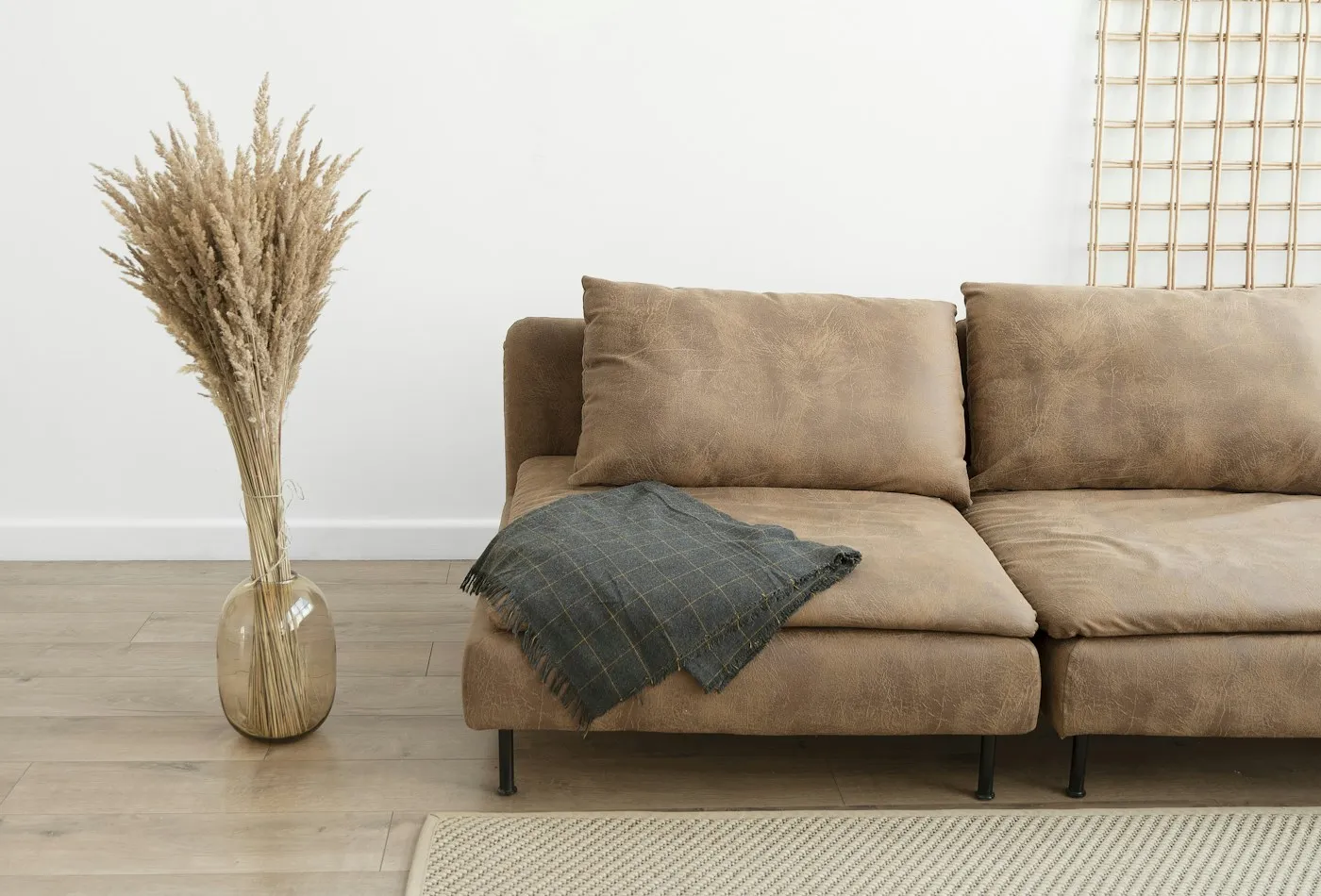
Why a brown leather sectional with chaise
A brown leather sectional with chaise combines three things many households want: room to stretch out, a warm color that hides everyday wear, and a material that can last for years. The chaise gives one person a full place to put their feet up, while the rest of the sofa seats the family.
Brown leather also ages well. Good leather softens and develops a patina, so small scuffs blend into the character of the piece instead of looking like damage. Tones range from light cognac and caramel to deep chocolate and espresso.
Because a sectional is a large purchase, the details matter. The leather grade, the chaise side, the room fit, and the frame all decide whether it stays comfortable and looks good over time.
Understand leather grades first
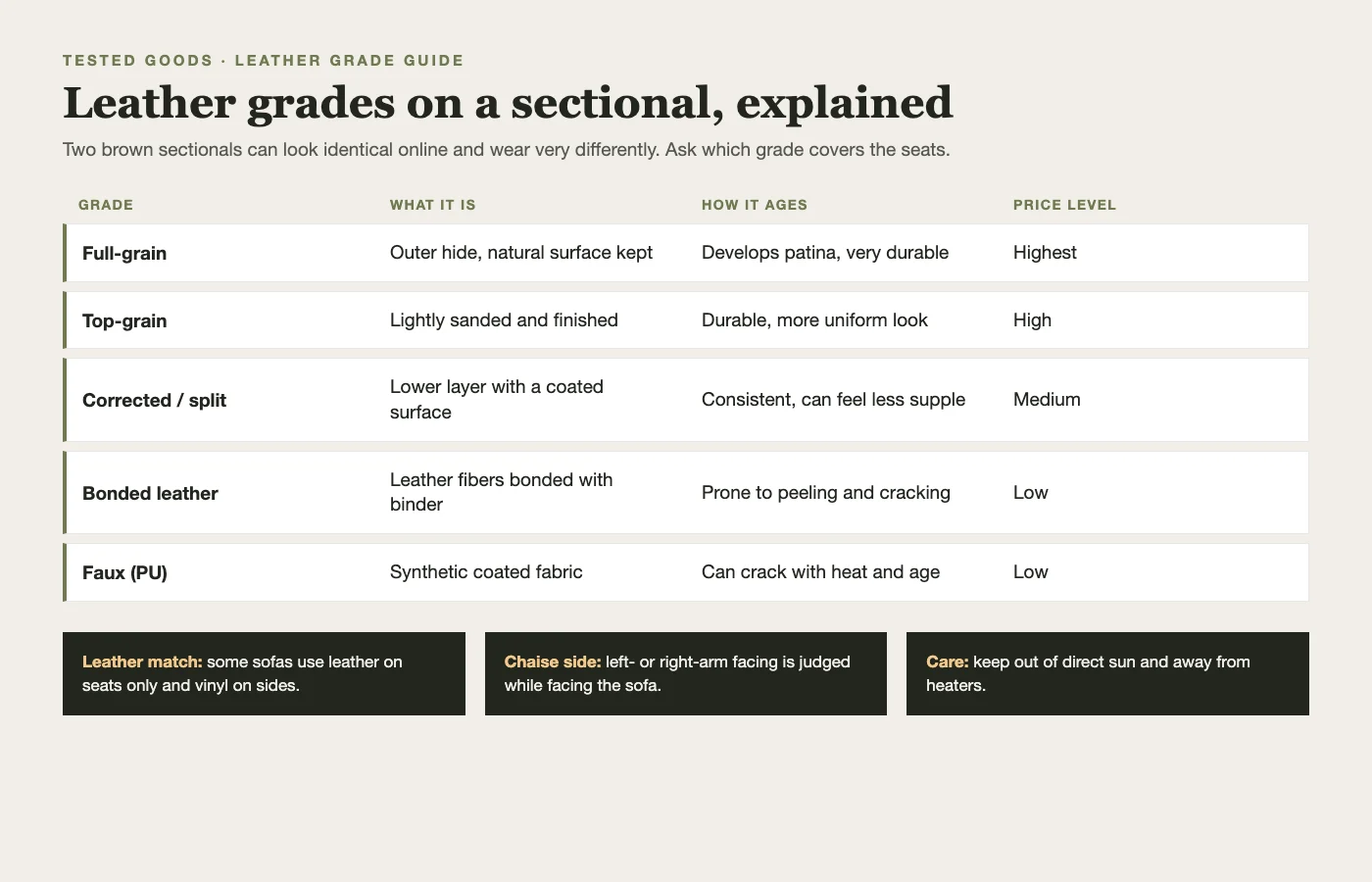
Full-grain leather keeps the outer surface of the hide. It is the most durable and develops the richest patina, but it shows natural marks. Top-grain leather is lightly sanded and finished for a more uniform look while staying durable.
Corrected or split leathers have a coated surface that looks consistent and resists stains, but they can feel less supple. Bonded leather is made from leather fibers and a binder; it is affordable but often peels or cracks. Faux leather is synthetic and can crack with heat and age.
Many sectionals use leather only on the seating surfaces and a matched vinyl or bonded material on the sides and back. That is not necessarily bad, but it should be stated clearly. Ask which material covers each surface.
Leather finishes: aniline, semi-aniline, protected
Aniline leather is dyed through with no protective coating. It feels soft and natural but absorbs stains and fades in sun. Semi-aniline adds a light protective layer for better resistance while keeping a natural feel.
Protected or pigmented leather has a stronger surface coating. It is the most practical for families and pets because spills wipe off more easily, though it feels less soft and shows less patina.
For a brown leather sectional used every day, semi-aniline or protected leather is usually the most practical balance.
Left-arm or right-arm facing chaise
Chaise orientation causes many returns. Listings describe pieces as left-arm facing or right-arm facing, judged while you stand in front of the sofa looking at it. A right-arm facing chaise sits on your right as you face the sofa.
Plan the chaise side around the room: windows, the TV position, doors, and walkways. A chaise placed on the open side of a room can make the space feel enclosed; on the wall side it keeps paths clear.
Some sectionals have a reversible chaise or modular pieces you can swap. If you might move house, that flexibility is worth paying for.
Size the sectional to the room
Measure the wall length and the depth available. Many sectionals with a chaise run roughly 85 to 110 inches wide, and the chaise often extends 60 to 70 inches from the back. Mark the full footprint on the floor with painter's tape.
Leave about 30 to 36 inches for main walkways and roughly 14 to 18 inches between the seat edge and a coffee table. Check that the chaise does not block doors, radiators, or heating vents.
Measure the delivery route as well: doors, hallways, stair turns, and elevators. Compare them with the size of each section, not just the assembled sofa.
Comfort: seat depth, height, and cushions
Leather seats feel different from fabric. They are smoother, slightly firmer at first, and soften with use. Seat depth around 21 to 24 inches suits upright sitting; deeper seats suit lounging.
Seat height around 17 to 19 inches works for most adults. Check the chaise length too. Taller people should make sure the chaise supports their legs fully.
Cushion fill affects shape over time. High-resilience foam keeps a neat look that suits tailored leather. Foam wrapped in fiber or down feels softer but can crease the leather as it settles.
Frame, suspension, and connectors
Kiln-dried hardwood or engineered hardwood frames resist warping. Ask how corners are joined and reinforced. Sinuous springs and webbing are both common suspension types.
Sectional pieces should lock together with metal brackets or clips so they do not drift apart. Test the connection points if you can see the sofa in person.
If the sectional has power recline or USB ports, check where the cables run and which parts the warranty covers separately.
Brown leather in different room styles
Cognac and caramel leathers suit mid-century and Scandinavian rooms with light wood and white walls. Chocolate and espresso tones suit traditional and industrial rooms with darker woods, brick, and metal.
Soften leather with textiles. Wool throws, linen pillows, and a rug with some pile add warmth and stop the room from feeling slippery or cold.
Brown pairs well with cream, olive, rust, navy, and charcoal. Avoid matching every wood tone exactly; slight contrast looks more natural.
How to judge leather in person or online
In a showroom, press the leather and look at how it wrinkles. Full-grain and semi-aniline leather wrinkle softly and recover; heavily coated leather creases in a more uniform, plastic-like way. Look for natural variation in grain, which signals less correction.
Online, read the material section carefully. Phrases like genuine leather or leather match are less specific than top-grain leather on all seating surfaces. Ask the seller for a leather sample and the name of the leather line if possible.
Smell and feel help too. Real leather has a natural scent and warms quickly under your hand. Synthetic materials often feel cooler and more uniform.
Caring for a leather sectional
Dust weekly with a soft dry cloth. Wipe spills quickly with a slightly damp cloth, then dry. Avoid household cleaners, which can strip finishes.
Condition the leather as the maker recommends, often a few times a year. Keep the sectional away from radiators and strong direct sun, which dry and fade leather.
Scratches on full-grain and semi-aniline leather often fade with gentle buffing. Deeper damage may need a leather repair specialist.
Pets, kids, and leather
Leather does not hold pet hair the way fabric does, and spills wipe off easily, which many households like. Claws can scratch it, though. Protected leather shows scratches less than aniline.
A throw on the chaise, where pets and children tend to sit, reduces wear. Trim pets' nails regularly and teach them a designated spot if possible.
Recliners, storage, and other features
Some brown leather sectionals include power or manual recliners, adjustable headrests, cup holders, or storage under the chaise. These add convenience but also add weight, mechanisms, and cables.
If you want a reclining sectional, check the wall clearance needed for full recline and where power cords run. Wall-hugger designs need less space behind them.
Storage chaises are useful for blankets and games. Check that the lift mechanism is smooth and that the storage area is lined to protect contents.
Budget and warranty
Lower-priced sectionals often use bonded leather or leather only on the seats. Mid-range models use top-grain leather on contact surfaces with good frames. Higher-end sectionals use full-grain or top-grain throughout, with better suspension and custom sizes.
Read the warranty for the frame, cushions, leather, and any mechanisms separately. Longer frame warranties usually indicate confidence in construction.
Brown leather sectional FAQ
Is a leather sectional hot in summer? Leather can feel warm in heat and cool in winter at first, then adjusts to body temperature. Air conditioning and a light throw help.
Will brown leather fade? Aniline and semi-aniline leathers can lighten in strong sun. Protected leather resists fading better.
How long does a leather sectional last? A well-built sectional with top-grain or full-grain leather and good care can last many years.
Can I mix a leather sectional with fabric chairs? Yes. A linen or boucle accent chair softens the room and balances the leather's sheen.
What size rug works with a sectional with chaise? Choose a rug large enough for at least the front legs of the main sofa and chaise to sit on it, often 8 by 10 feet or larger.
Final checklist
Confirm the leather grade and which surfaces it covers, the finish type, the chaise orientation, and the full footprint. Check seat depth, seat height, cushion fill, frame, and connectors.
Measure the delivery route, ask for a leather sample, and read the return and warranty terms before ordering.