Why a white and wood accent chair works
A white and wood accent chair brings light and warmth into a room at the same time. White upholstery reflects light and keeps the chair from feeling heavy, while an exposed wood frame adds a natural texture that pairs with floors, tables, and shelves.
The combination suits many styles: Scandinavian, Japandi, coastal, farmhouse, and mid-century modern. It works as a reading chair, a pair beside a fireplace, or a single chair in a bedroom corner.
White fabric and visible wood each need their own checks. This guide walks through frame woods, finishes, fabrics, comfort, and care so the chair still looks fresh after daily use.
Choose the frame wood
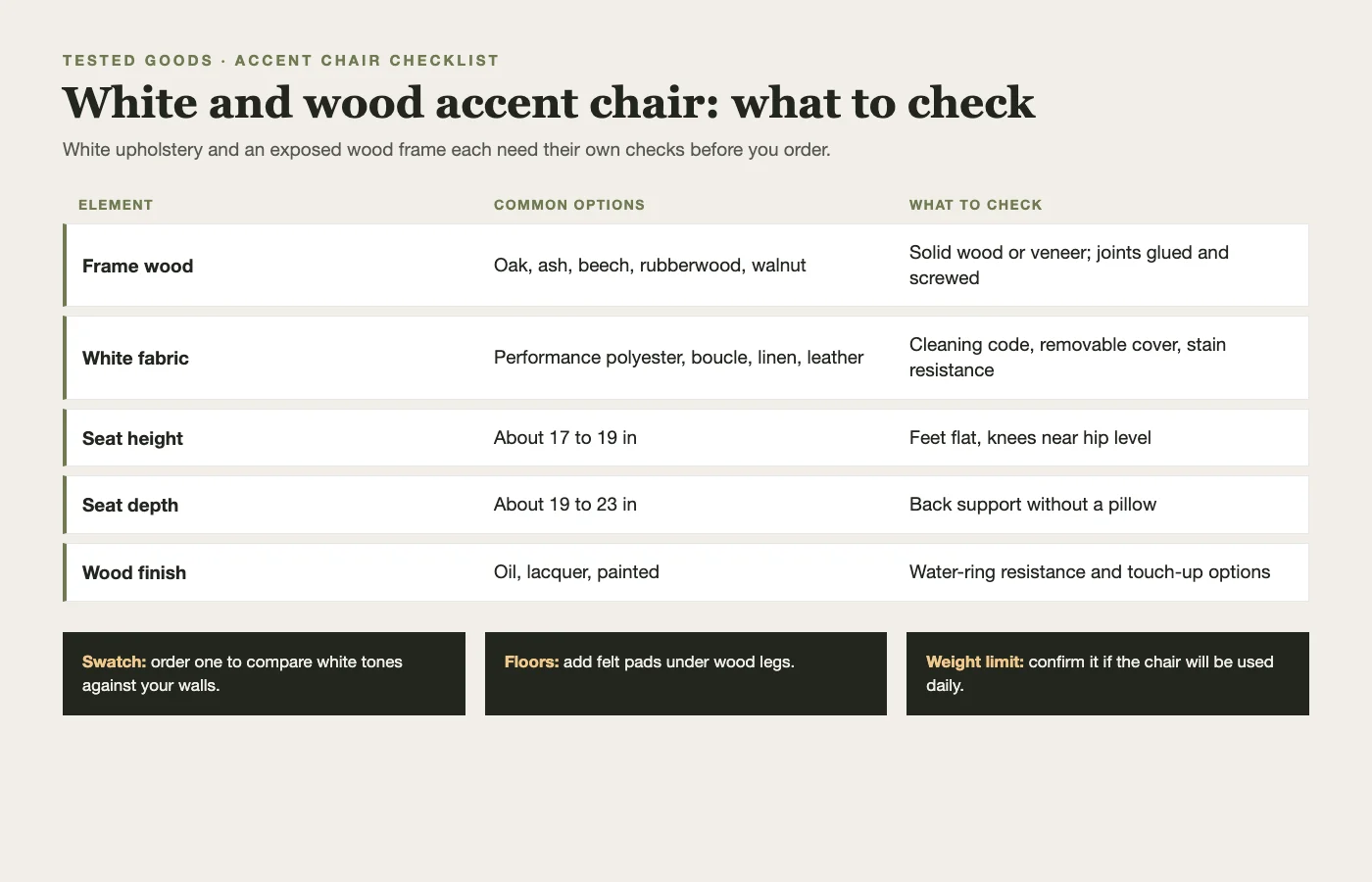
Oak is hard and durable with a visible grain that looks natural in light finishes. Ash is similar in tone, slightly more flexible, and common in bentwood designs. Beech is smooth and even, and takes stain well.
Walnut is darker and richer, creating strong contrast with white upholstery. Rubberwood is common in budget furniture; it is stable and takes finish well, though softer than oak.
Check whether the frame is solid wood or veneer over engineered wood. Veneer can look excellent and resist warping, but exposed edges and arms on a chair take knocks, and solid wood is easier to repair.
Wood finishes and how they wear
Oil and hardwax oil finishes look natural and are easy to touch up, but they need occasional reapplication and are less resistant to water rings. Lacquer finishes resist spills better but are harder to repair when scratched.
Natural, light finishes show the grain and keep the room bright. Darker stains add contrast. Painted frames, often white or black, create a different look but chip more visibly.
Arms are the most-touched part of the chair. A tougher finish there helps it look good longer.
Pick a white fabric you can keep clean
Performance polyester and acrylic blends resist stains and are often rated for water-based cleaning. They are the most practical choice for everyday white seating.
Boucle has a soft, nubby texture that hides small marks but can catch on pet claws and collect lint. Linen and cotton blends look relaxed and breathe well but wrinkle and stain more easily. White leather wipes clean but shows dye transfer from dark jeans.
Check the cleaning code: W for water-based cleaners, S for solvent, WS for either, X for vacuum only. Removable, washable cushion covers make white upholstery much easier to live with.
Different shades of white
Bright white looks crisp and modern but shows dirt quickly. Ivory, cream, and oatmeal look warmer and more forgiving, and they pair naturally with wood tones.
Order a swatch and compare it with your walls, rug, and other textiles. A white that looks pure online may read cool or yellow next to your paint.
If the room has warm wood floors, a slightly warm white usually looks more harmonious than a stark white.
Comfort: size and shape
Seat height around 17 to 19 inches lets most adults sit with feet flat and knees near hip level. Seat depth between about 19 and 23 inches suits upright sitting and reading.
Check the back angle. Lounge-style chairs recline more and feel relaxed; upright chairs suit conversation and desk use. Arm height should let your shoulders relax.
Cushion construction matters. High-resilience foam holds shape; a fiber wrap adds softness. Loose back cushions are comfortable but need straightening.
Joinery and build quality
Look for joints that are glued and screwed or doweled, not just stapled. Mortise-and-tenon joints are common in better wood chairs and resist loosening.
Sit and shift your weight. A well-built chair should not creak or rock. Check that the feet sit level and that there are protective glides underneath.
Confirm the weight capacity if the chair will be used daily, and check whether assembly is required. Retighten bolts after a few weeks if the chair arrives flat-packed.
Common design styles to compare
Scandinavian chairs use light oak or ash, simple lines, and loose white cushions on a wood frame. They feel airy and work in small rooms.
Mid-century designs often use walnut or teak-toned wood with angled legs and tight upholstered seats. They suit rooms with warm wood furniture and graphic accents.
Farmhouse and coastal styles lean toward chunkier frames, slipcovered white fabric, and weathered or whitewashed finishes. Japandi chairs combine low, wide seats with natural wood and textured off-white fabric.
Placement and room fit
Accent chairs look best with breathing room. Leave enough space to stand up comfortably and to walk past, often around 30 inches for main paths.
Measure the footprint including the angle of the back legs, which on some designs extend beyond the seat. In small rooms, chairs with raised legs and open arms look lighter than solid, skirted chairs.
Place a white chair where it gets gentle light rather than harsh afternoon sun, and add felt pads under the legs to protect wood or tile floors.
Styling a white and wood accent chair
Pair the chair with a small side table and a floor lamp to create a reading corner. A textured throw in sand, rust, or olive adds warmth.
In a living room, place two matching chairs opposite the sofa for balance. Repeating the wood tone in a coffee table or frames ties the room together.
In bedrooms, a white and wood chair works well near a window. Add a sheepskin or knit pillow for a softer look.
Caring for white upholstery and wood
Vacuum the upholstery weekly and spot clean spills right away according to the cleaning code. Test cleaners in a hidden spot first.
Wipe the wood with a dry or slightly damp cloth, then dry it. Use coasters on wide arms. Re-oil oiled finishes as the maker suggests.
Keep the chair away from strong sun, which can yellow white fabric and fade wood finishes unevenly.
Using a white and wood chair as part of a set
Many white and wood accent chairs come with a matching ottoman. An ottoman turns an upright chair into a lounge spot and gives guests extra seating.
If you buy two chairs, check that both arrive from the same production batch so wood tones and fabric shades match. Natural wood varies, so slight differences are normal.
Mixing one white and wood chair with a different accent chair can look relaxed and collected. Repeat one element, such as wood tone or fabric color, so they still feel related.
Assembly and delivery
Many accent chairs ship flat-packed with legs or arms to attach. Check the instructions, use the supplied hardware, and tighten bolts again after a few weeks as the wood settles.
Inspect the fabric on arrival in daylight. White fabric can show transport marks or slight shade differences, and returns are easier before you remove all packaging.
Budget and value
Budget chairs often use rubberwood or veneer frames with thinner cushions. Mid-range chairs use solid hardwoods, better foam, and performance fabrics. Higher-end chairs add premium woods, hand-finished joinery, and designer shapes.
Compare warranty terms for the frame and the upholstery separately. A removable cover can extend the life of a white chair significantly.
White and wood accent chair FAQ
Is a white accent chair practical with kids or pets? It can be with a performance fabric and washable covers. Choose warmer whites that hide marks better.
Which wood looks best with white? Oak and ash give a light Scandinavian look; walnut gives stronger contrast. Choose based on the other woods in the room.
Can I use it at a desk? Upright designs with a firm seat work well at a desk. Lounge chairs are better for reading.
How do I keep white fabric from yellowing? Keep it out of strong sun, clean spills quickly, and avoid harsh bleach-based cleaners unless the label allows them.
Do I need matching chairs? Not necessarily. A single chair works in a corner, while a pair creates symmetry in a living room.
Final checklist
Confirm frame wood and whether it is solid or veneer, the finish, the fabric, the cleaning code, and whether covers are removable. Check seat height, seat depth, arm height, and weight capacity.
Order a fabric swatch, plan placement away from strong sun, and read the return policy before buying.