
Decide which workflow the lift must support
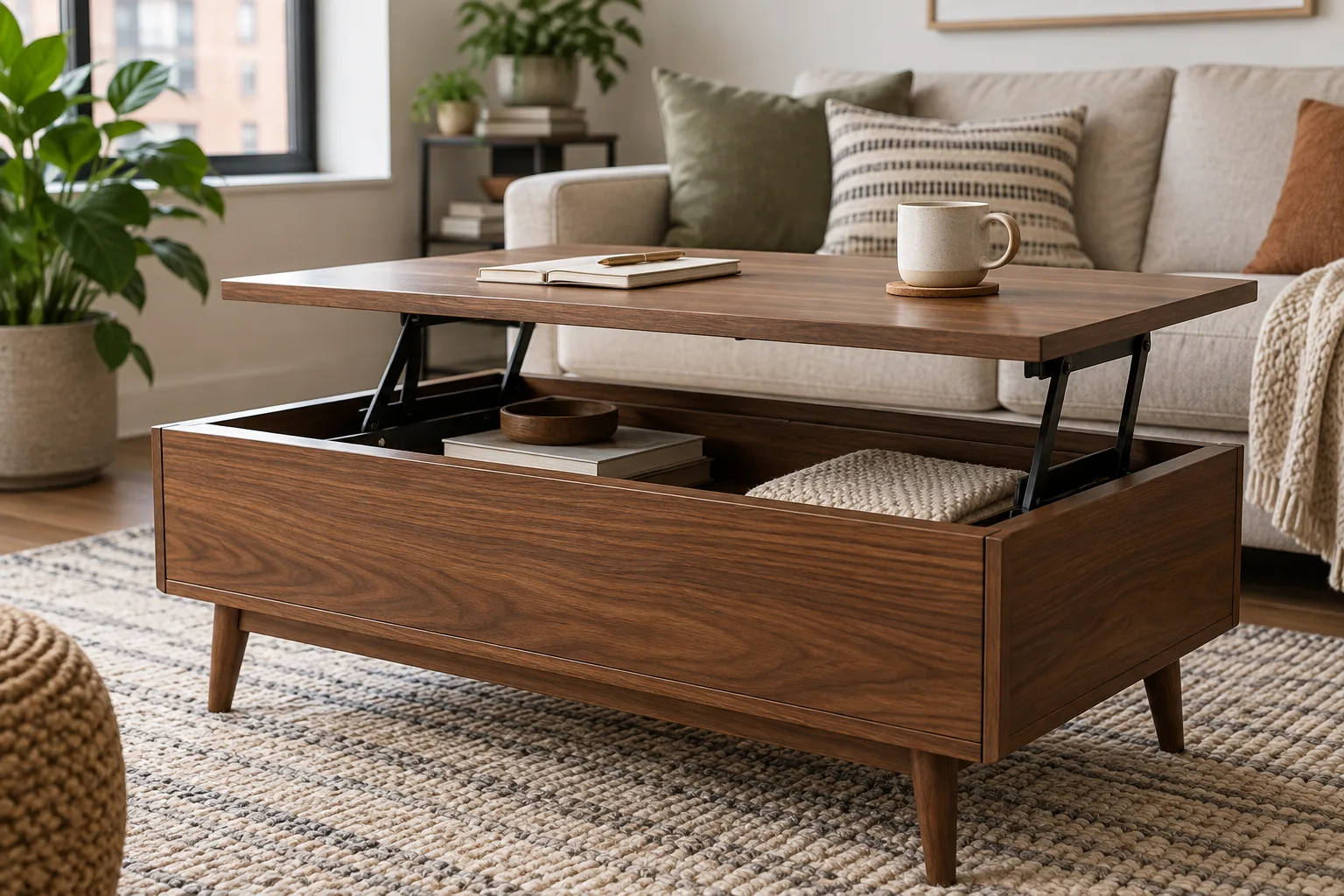
A coffee table with lift top is useful when the same room needs more than one surface height. It can bring a laptop closer for a short work session, support a meal in front of the sofa, or hide remotes and notebooks when the room needs to reset. The mechanism adds weight and moving parts, so the table should solve a real routine rather than provide a feature you rarely use. List the tasks you expect to repeat in a normal week before comparing finishes or storage capacity.
A raised top is not a substitute for a dedicated desk or dining table in every situation. It may have limited knee clearance, a smaller work area, and a fixed relationship to the sofa. It can still be valuable in an apartment, guest room, or flexible lounge when you understand those limits. Choose a table around the posture, devices, dishes, and people it must serve, then assess whether the room has enough open space to use it safely.
Measure the table in every position
Record the closed width, depth, and height first, then measure the raised height, top depth, and forward travel. Many listings show only the closed footprint. A lift top may move toward the sofa, away from the center of the room, or rise in a path that needs clearance for a laptop or plate. Mark both positions on the floor with tape and check the distance to the sofa, rug, side table, and walking route.
Check the room's pinch points before ordering. A raised top can interfere with a person passing behind the sofa, a drawer opening nearby, or a door that swings into the lounge. The table also needs enough room for a user to sit without pressing knees against the base. If you share the room, measure the usable surface with two people present. A dimension that works for one laptop may fail when another person needs to pass or set down a drink.
Judge the lift mechanism by control and support
The lift mechanism determines how the table feels every time it changes position. Look for a controlled opening path, a top that stays aligned, and hardware that does not require excessive force. Springs, hinges, and gas-assisted supports can all work when properly specified. The product page should explain the movement and any weight guidance. Be cautious when the mechanism is shown only from one angle or when the top appears to float without visible support.
Test for side-to-side play when the top is closed and raised. A little movement may be normal, though a loose hinge can make typing, eating, or placing a mug uncomfortable. Check whether the top locks or rests securely in the working position and whether it can be lowered without fingers entering a pinch point. Children and pets change the safety context, so a smooth closing path and stable base matter more than a dramatic lifting range.
Compare the surface to the work you actually do
A work surface needs enough depth for the device, notebook, and accessories you use together. A narrow raised panel may suit a tablet and coffee, while a wider top can support a laptop and mouse. Record the usable top dimensions with the edge profile included. A thick lip, cup holder, or decorative divide can reduce the flat area more than the overall measurements suggest.
The surface height also changes comfort. A raised table can bring a screen closer but may still leave the keyboard too high for long sessions. Treat it as a flexible short-duration surface unless the geometry supports your posture. For meals, consider plate size, spill risk, and whether the top remains stable when someone leans lightly on an edge. The table should support ordinary use without asking you to balance everything in a small central zone.
Use storage as a secondary benefit
The cavity beneath a lift top can reduce visual clutter, but storage claims need a closer look. Measure the opening, internal height, and usable depth rather than relying on the table's overall size. Check whether the hinge hardware occupies part of the compartment and whether a laptop, board game, or remote basket can be removed without lifting the top completely. A shallow cavity may be ideal for small objects and disappointing for bulky blankets.
Access matters more than raw capacity. If the top must be raised every time you need a charger, the storage may not support the routine. Keep high-frequency items in a reachable tray and reserve the cavity for objects that benefit from being hidden. Look for ventilation and cable routing if the compartment will hold electronics. Do not block the mechanism with heavy items or exceed any load guidance supplied by the manufacturer.
Check construction, finish, and cleaning
A lift-top table experiences more stress than a static side table because the moving panel transfers force into the frame. Inspect the base, fasteners, hinge plates, and points where the legs meet the apron. Solid wood, veneer, engineered wood, and laminate each present different trade-offs in weight, appearance, moisture tolerance, and repair. Product language should distinguish a solid component from a wood-look finish.
Use the care instructions to evaluate the finish. A glossy surface may show fingerprints and cup rings quickly. A textured wood-look panel can hide small marks while collecting dust in the grain. Ask how spills should be handled and whether the surface tolerates common cleaners. Keep hot cookware, standing water, and abrasive objects away unless the manufacturer's instructions explicitly allow them. Daily maintenance should be simple enough to happen after use.
A practical lift-top coffee table checklist
Before ordering, write down the closed footprint, raised footprint, top height, usable work area, knee clearance, storage opening, mechanism type, stability, edge profile, material, finish, cleaning method, assembly requirements, delivery dimensions, warranty, and return conditions. Confirm that the table can enter the room and that the moving top will not strike a wall, light, or person.
The right coffee table with lift top is a small piece of infrastructure. It makes a repeated task easier, keeps the room flexible, and remains stable when the top is open or closed. Choose the mechanism for controlled movement, the dimensions for your actual seating, and the finish for the way the table will be treated every day. A lower feature count with better geometry will usually serve longer than an overbuilt table that crowds the room.


