Lucky Brand jeans: the short answer
Lucky Brand jeans cover a wide range of fits, rises, washes, inseams, and everyday silhouettes. The brand catalogue includes straight, slim, relaxed, athletic, bootcut, baggy, flare, wide-leg, and other cuts across men’s and women’s denim. That variety helps shoppers find a shape that suits their wardrobe, though it also makes a quick size guess unreliable. The right choice depends on the relationship between your measurements, the rise, the leg shape, the fabric, and the way you plan to move in the jeans.
Use this Lucky Brand jeans guide as a buying checklist rather than a universal fit promise. Start with the job the jeans need to do, measure before you browse, and compare the individual product details with a pair you already own. Product availability, prices, promotions, shipping, and returns can change, so confirm those terms at the merchant before payment. The shopping links in this guide use the supplied affiliate route; the destination page controls the final transaction details.
Choose the job before the silhouette
A pair of jeans for commuting, travel, weekend errands, office-casual dressing, or nights out may need a different balance of structure and movement. Write down where you will wear them, how long you will sit, how much walking you expect, and whether you need to layer a shirt or sweater. A rigid dark pair can create a cleaner look, while a stretch or relaxed cut may be easier for long days. The best starting point is the use case, not the most dramatic photo in the collection.
Think about the rest of the outfit as well. Bootcut or flare jeans need enough room at the hem for the footwear you plan to wear. Cropped or shorty lengths change the visual balance of sneakers and boots. A high-rise style may work with a tucked shirt or cropped layer, while a lower rise may sit more naturally with longer tops. These are styling choices, though they also affect comfort because the waistband and seat remain in contact with the body throughout the day.
Measure first and use the current size guide
Measure at home before comparing Lucky Brand jeans. Use a soft tape measure and keep it level around the body. For women’s denim, the current Lucky Brand guide lists waist and hip measurements alongside denim sizes and recommends using a soft tape measure. For men’s jeans, the brand guide lists numeric sizes with waist ranges and separates jeans from other bottoms. Record the result in inches or centimetres, then use the same unit shown on the product page.
Measure both sides when your body is not perfectly symmetrical and use the larger relevant measurement as your starting point. Keep the tape comfortably close without pulling it tight. If you normally wear an undershirt or base layer with your clothing, measure in that layer when it changes the fit you need. A measurement taken over bulky clothing can push you into a size that becomes loose once you dress normally.
The size number still needs context. Compare your waist and hip relationship with the cut. A curvy or athletic shape may need more room through the hip or thigh, while a straighter body may prefer a narrower seat. If you fall between sizes, read the product notes, inspect the fabric composition, and decide whether you want a close fit or more ease. Do not assume that the same numeric size will feel identical across a skinny, relaxed, baggy, and straight leg.
Understand rise before judging the waistband
Rise is the distance from the crotch seam to the top of the waistband. It changes where the jeans sit and how the fabric travels over the hips, abdomen, and seat. Lucky Brand’s women’s collection includes super-low, low, mid, and high rises, while men’s collections include low and mid options. A rise that looks right on a model may sit differently on your body because torso length, hip shape, and the way you stand all change the result.
A higher rise can create a secure feeling at the waist and pair cleanly with a tucked top, though it can feel restrictive when the front rise is too short for your body. A low rise may leave more room above the waistband and suit longer tops, though it can slip or expose the back when the cut does not match your shape. Try to judge rise while standing and sitting. The waistband should stay in the intended position without cutting sharply or requiring constant adjustment.
Match the leg shape to movement and shoes
The leg shape determines how the jeans move and how much visual volume they add. Straight jeans keep a consistent line and work across many wardrobes. Slim and tapered cuts narrow toward the ankle, which can suit a cleaner sneaker or boot profile. Relaxed and loose fits create more room through the seat and thigh. Baggy styles add even more volume and need enough space around the hem so the fabric does not catch underfoot.
Bootcut jeans stay closer through the thigh and open slightly toward the calf. Flare jeans widen more noticeably from the knee. Wide-leg and palazzo styles create a larger vertical column and may need a deliberate hem length. Compare the product’s stated inseam with the shoes you plan to wear. A pair that works with flat sneakers may become too short with a boot, while a full-length wide leg can brush the floor if the hem was chosen for a shorter shoe.
Movement is a useful fit test. Bend your knees, sit, climb a step, and walk several minutes in the same footwear and base layer you expect to use. The seat should not pull aggressively, the knee should not feel tight, and the hem should remain clear of the ground. A relaxed fit that feels comfortable in a fitting room may still be too wide for a crowded commute, so judge the jeans against the surfaces and activities of a normal day.
Compare denim weight, stretch, and recovery
Denim can feel crisp, soft, structured, or flexible depending on its fiber blend, weight, finish, and construction. A firmer fabric can hold a sharp silhouette and soften with wear, though it may require more break-in time. Stretch denim can make sitting and walking easier, though stretch does not compensate for a wrong rise or an undersized waistband. Read the product composition and notes instead of treating every blue jean as the same material.
Recovery matters when a pair needs to keep its shape through repeated wear. A fabric that relaxes after a few hours may feel comfortable at first and loose later. Consider when you will wash the jeans, how often you rotate them, and whether a close fit leaves enough room for normal movement. If you prefer a less body-contoured look, a straighter or relaxed cut can provide ease without relying on a highly elastic fabric.
Check the care label before ordering. Some denim can be machine washed, while the instructions may still recommend cold water, turning the garment inside out, avoiding harsh heat, or line drying. High heat can affect shrinkage, color, and elastic fibers. Care is part of fit because a pair that changes significantly after the first wash may no longer match the decision you made at checkout.
Use wash and details to plan a real wardrobe
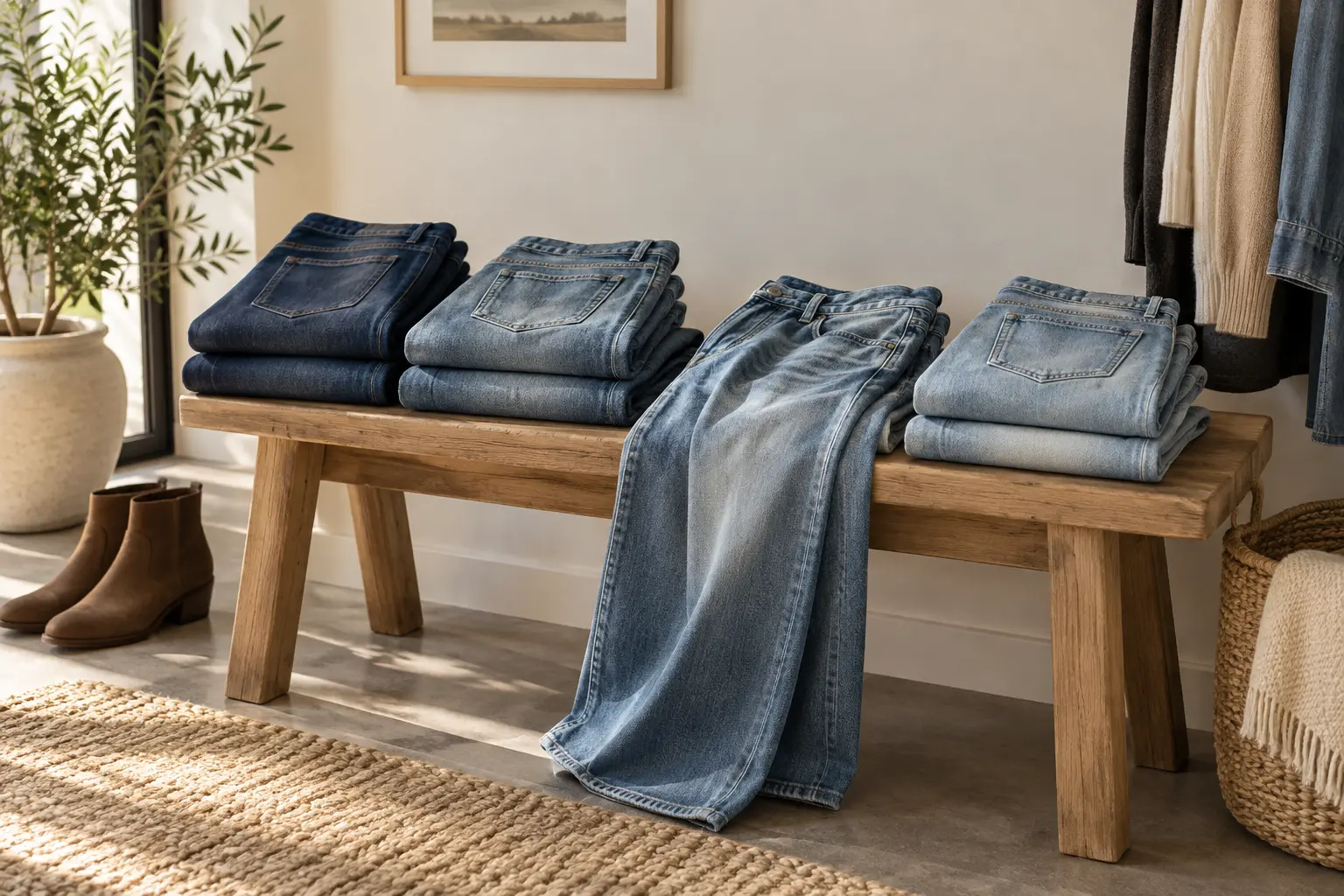
A wash should serve the clothes you already own. Light denim can look relaxed and seasonal, medium washes are flexible for everyday outfits, and dark or black denim can read more polished. Colored or special finishes may be useful when the rest of your wardrobe is restrained, though they deserve a check against the shoes, jackets, and tops you will actually pair with them. Choose a wash that creates several complete outfits instead of a single impressive image.
Check availability, delivery, and returns before payment
Denim shopping is easier when you treat the product page as a specification sheet. Confirm the chosen size, inseam, wash, rise, fit name, composition, current price, and stock status. If a promotional price is shown, read the conditions and end date shown at checkout. A product may be available in one wash and sold out in another, and the same fit may have different size coverage between men’s and women’s collections.
Check the expected processing and delivery timing if you need the jeans for travel, an event, or a seasonal change. Save the order confirmation and the product details. When the parcel arrives, inspect the size, wash, stitching, fasteners, inseam, and labels before removing anything that affects return eligibility. Try the jeans indoors on a clean surface with the intended underlayer and footwear. Keep the packaging until you have decided to keep the pair.
Read the current return policy at the destination before payment. Pay attention to the return window, condition requirements, final-sale exclusions, return shipping, and whether exchanges are available. A low price loses its value if the fit is uncertain and the item cannot be returned. Policies can change, so the live merchant page takes priority over any general guide.
Build a Lucky Brand jeans shortlist
A short list should contain two or three candidates with different strengths. For example, you might compare a straight leg for maximum outfit flexibility, a relaxed fit for long days, and a bootcut or flare for a specific pair of boots. Record the size guide, rise, inseam, fabric, wash, care notes, price, availability, and return terms for each candidate. This side-by-side view reduces the chance that a single product photo will make the decision for you.
Lucky Brand jeans questions shoppers ask
Are Lucky Brand jeans true to size? There is no single answer for every fit. Use the current product-level size information, compare waist and hip measurements, and account for rise, leg shape, and fabric stretch. The same numeric size can feel different in a slim, straight, relaxed, or baggy cut.
Which Lucky Brand jeans fit is most versatile? Straight jeans are a practical starting point because they work with many tops and shoes. Relaxed, bootcut, flare, wide-leg, and baggy options can be better when your wardrobe or body shape calls for more room or a stronger silhouette. Choose by use case and footwear rather than by a general ranking.
How should Lucky Brand jeans be cared for? Follow the exact care label on the product. In general, protect the wash by using the recommended water temperature, reducing unnecessary heat, and drying the jeans according to the instructions. Check the live label and product page because fiber blends and finishes can change the routine.
The Lucky Brand jeans decision
Choose the pair that fits your measurements, movement, wardrobe, and care habits at the same time. A strong denim purchase has a clear job: the rise sits where you expect, the leg shape works with your shoes, the fabric provides the right amount of structure, and the wash earns several outfits. Product photos help you narrow the field; measurements and return terms protect the decision.