Women's shoes from Dr. Scholl's: the short answer
The search demand around women's shoes from Dr. Scholl's points to a practical shopping question: which style will stay useful through a normal day? The brand name is associated with foot comfort, but a name alone cannot tell you whether a particular sneaker, loafer, sandal, or walking shoe will suit your foot. The important comparison happens at product level. Look for the intended activity, available size range, width information, upper material, closure, footbed description, and outsole construction before you decide.
A sensible order starts with the job the shoe must perform. Office commuting, long periods of standing, errands, travel, and casual weekends create different requirements. A flexible sneaker may work well for light daily movement, while a structured loafer may be more appropriate when you need a cleaner silhouette. A comfortable shoe still has to fit securely, leave room for the toes, and match the surfaces and distances you will actually encounter. Treat the product page as a specification sheet, then compare it with a pair you already know fits well.
Start with fit, width, and foot shape
Fit deserves more attention than the word comfort in a product description. Measure both feet at the end of the day, when they may be slightly larger, and use the larger measurement as your starting point. Compare your length with the listed size guide, then check whether the design offers enough room across the ball of the foot. Toe room matters: your toes should not press against the front when you stand, and the upper should not create a hard ridge across the widest part of your foot.
Width can be just as important as length. A shoe that is too narrow can feel restrictive even when the size number is technically correct, while too much room can make the foot slide and create friction. Look for width options, adjustable laces, straps, elastic panels, or a fastening system that lets you fine-tune the fit. If you use an insert, check whether the insole is removable and whether adding volume will make the shoe feel crowded. Try new shoes indoors on the same socks you expect to wear outside.
Separate cushioning from support
Softness and support are related, though they are not identical. Cushioning changes how impact feels underfoot. Support concerns how the shoe holds the foot through the heel, arch, sides, and upper. A very soft footbed may feel pleasant at first and still allow too much movement for your stride. A firmer platform may feel more stable, yet the shape can be wrong for your arch or toe area. The right balance depends on your foot, activity, and personal tolerance for firmness.
Dr. Scholl's official materials describe different technologies and inserts for different footwear situations, including casual shoes, sneakers, flats, boots, heels, and athletic shoes. That does not mean every feature is useful to every shopper. Read whether a product is designed for cushioning, targeted pressure distribution, odor control, energy, or a more structured fit. If you are considering footwear because of persistent foot pain or a diagnosed condition, use the manufacturer's information as product context and get individual guidance from a qualified professional rather than treating a marketing label as a medical conclusion.
Choose the silhouette by daily use
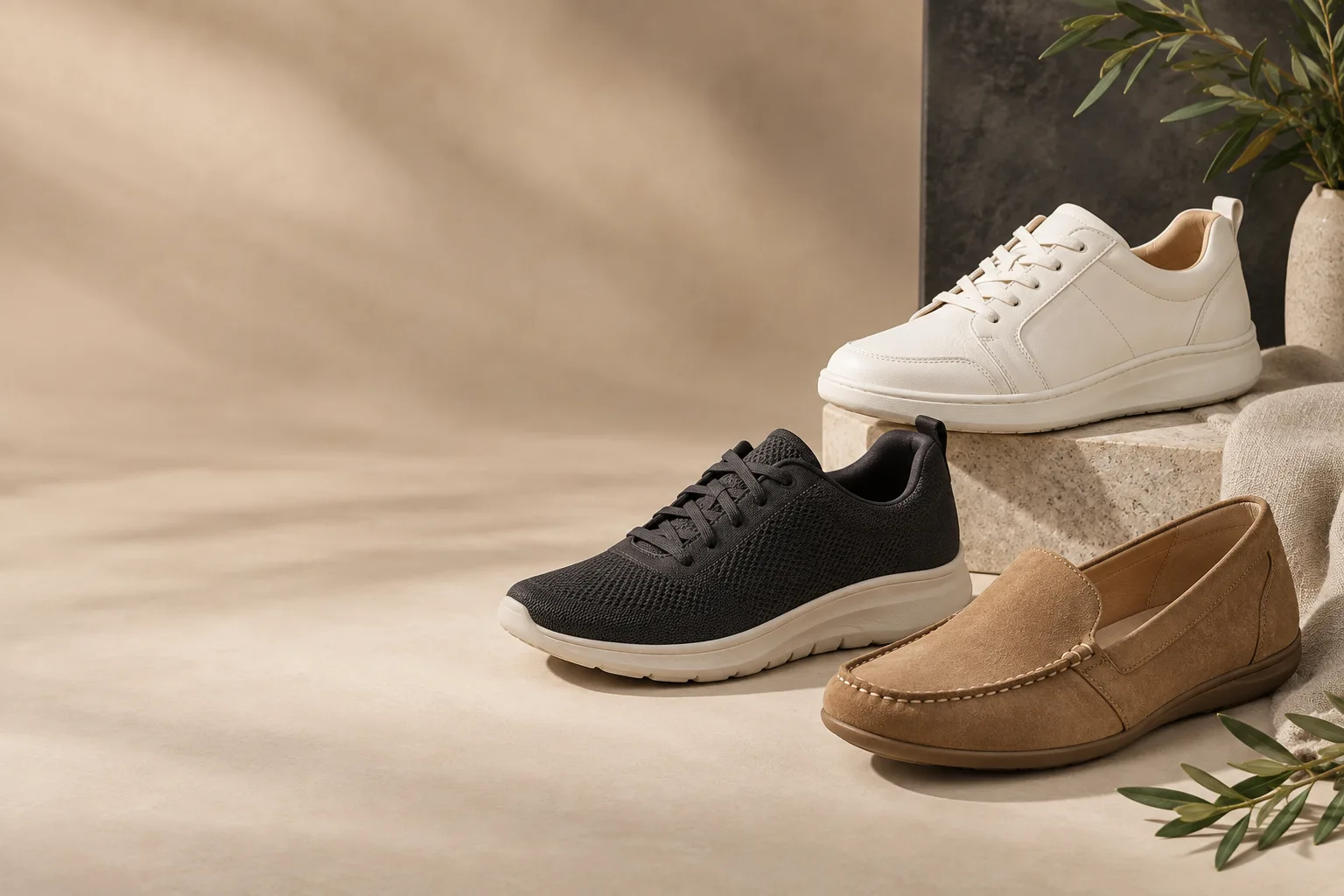
For commuting and errands, prioritize a secure upper, a sole that bends where your foot bends, and a heel counter that does not rub. Slip-on styles are convenient, but they need enough hold that you are not gripping with your toes to keep the shoe in place. Lace-up sneakers are easier to adjust across the day. Loafers can work for polished casual outfits when the heel and vamp hold the foot without forcing it forward.
For work, compare the dress code with the actual environment. A clean sneaker may fit a relaxed office, while a low-profile flat or loafer may be better when you need a more formal outline. For travel, look for a style that is easy to put on and remove, does not depend on a delicate finish, and has enough room for changes in socks. Sandals and heels should be assessed for strap placement, forefoot pressure, and how securely the foot stays positioned during turns and stairs.
For longer walks or active days, review the outsole and the shoe's intended category before focusing on appearance. A casual fashion shoe can be useful for everyday movement, but it should not be assumed to replace footwear designed for a specific sport. Check the tread, flexibility, upper breathability, and whether the heel-to-toe shape suits your stride. Replace the pair when the sole is visibly worn or the upper no longer holds the foot securely.
Read the material, construction, and care details
Material affects fit over time, maintenance, and the way the shoe responds to weather. Leather may soften and develop surface character, while textile or mesh can feel lighter and more breathable. Synthetic uppers may be easier to wipe clean, though heat and moisture can affect them differently. Check whether the lining is padded, whether the insole is removable, and whether the outsole has enough flex for the way you walk. Photos can help with shape, but the written specifications carry more decision-making value.
Care instructions should match your routine. If the shoe needs specialist cleaning and you regularly walk in wet conditions, the maintenance burden may outweigh the style benefit. Keep a new pair away from high heat, allow damp footwear to dry naturally, and use the cleaning method listed for its material. Rotate pairs when practical so one shoe is not exposed to the same moisture and friction every day. These simple habits extend useful wear without claiming a specific lifespan for a product you have not personally tested.
US shipping and returns to check before checkout
Dr. Scholl's official US shipping information says direct orders are shipped to continental US addresses and excludes Alaska, Hawaii, and US territories. It also states that orders are generally processed and shipped within 24 to 48 hours on business days. Economy delivery is listed as free for orders over $25, while express delivery is listed at a flat $12 with a stated one-to-three-business-day transit window. These details can change, so confirm the destination, shipping charge, and current estimate at checkout.
The official return page says a dissatisfied customer may request a refund for a direct DrScholls.com purchase within 30 days, less original shipping and handling fees, at the company's discretion. It also says purchases made through authorized retailers must follow that retailer's return policy. That distinction is easy to miss when comparing listings across multiple stores. Save the order confirmation, keep the shoes indoors and clean during the try-on, leave the packaging and labels intact, and contact the correct seller before sending anything back.
A return window is part of the price calculation. A lower ticket price is less attractive if the fit is uncertain and the return process is expensive or time-sensitive. Check whether the affiliate destination sends you to the direct US shoe store or another authorized seller, then read the final policy shown for that checkout. The link in this article is a shopping route; the merchant's current product, shipping, and return terms control the transaction.
A practical Dr. Scholl's women's shoes checklist
Before you order, write down the use case, your measured foot length and width, the socks you will wear, and the three features that matter most. Then record the product's listed size range, width options, closure, upper, lining, insole, outsole, care method, price, shipping estimate, and return eligibility. If one of those fields is missing, decide whether the uncertainty is acceptable or whether you need clarification first.
When the shoes arrive, inspect both pairs under natural light. Check that the size, color, and style match the order. Try them on a clean indoor floor, walk, turn, climb a few steps, and notice whether the heel lifts, the toes touch the front, or the upper presses at the widest point. Comfort at the first step is useful information, but comfort after several minutes of normal movement is more informative. Stop the test if the shoe causes sharp or persistent discomfort.
Keep notes on what you observe instead of relying on a vague first impression. If the fit is wrong, use the seller's stated return route while the item is still in returnable condition. If the pair works, clean it according to the material instructions and rotate it with another suitable pair. That process produces a more reliable decision than a star rating or an unverified claim that one style will work for every foot.
Questions shoppers ask about women's shoes from Dr. Scholl's
Are Dr. Scholl's women's shoes automatically right for plantar fasciitis? No shoe can be assumed to suit every person or condition. Compare the product's shape and support information with your own needs, and seek qualified individual advice for persistent pain or a diagnosed condition.
How should I choose a Dr. Scholl's women's shoe size? Start with the individual product's size and width information, measure both feet, and compare the shape with a pair you already own. Use an indoor try-on so the product remains eligible for a return if the fit is wrong.
Where can I buy Dr. Scholl's women's shoes in the US? The shopping link in this guide leads through the supplied affiliate route. Confirm the final seller, destination coverage, shipping estimate, and return policy on the checkout page before paying.