Define the carrying job first
A Karl Lagerfeld sling bag is a compact carry solution, so the first question is what it must hold every day. Make a short list: phone, wallet, keys, sunglasses, small battery, passport, medication, or a pair of reading glasses. The list changes the required width, depth, pocket layout, and closure. A bag that looks sleek but cannot hold the items you carry most often becomes an accessory you leave at home.
Also decide how you want to wear it. A sling can sit high across the chest, rest closer to the hip, or move between shoulder sides. The strap range and adjustment hardware determine whether the bag can support those positions. If you travel, consider whether the profile stays close enough to the body for crowded places and whether the opening remains accessible without taking the bag off.
Check strap fit and body contact
The strap is the part you feel for the longest, yet product listings often give it less attention than the logo or front panel. Look for the minimum and maximum strap drop, the width of the webbing or leather, the adjustment method, and the attachment points. A narrow strap may suit a light load, while a wider one spreads pressure more comfortably when the bag is full.
Inspect the back panel as well. A smooth panel can slide against a coat, while a textured or padded panel may feel more stable but add warmth. The bag should sit without digging into the collarbone, rolling away from the body, or pulling the shoulder strap toward the neck. Compare the measurement against a bag you already wear successfully instead of guessing from a model photograph.
Separate exterior size from usable capacity
Exterior dimensions do not reveal the space available inside. Padding, a curved front, thick seam allowances, and a structured base can reduce usable capacity. Check the main compartment opening, internal depth, and whether the lining is fitted closely or leaves wasted corners. If the bag is intended for a phone and wallet only, compact capacity may be the point. If it must carry travel documents or a small camera, a narrow opening can become a daily frustration.
Pockets should match the items you reach for. A flat rear pocket can suit a transit card, while a zipped interior pocket can separate keys from a phone. Look for pocket dimensions when the listing provides them. Too many tiny compartments may create organization in the photograph but reduce the one open space needed for larger essentials. The best layout is the one that shortens your real search time.
Read material and hardware details
Material changes the weight, surface, care, and aging pattern. Smooth leather can develop visible marks and may require specific conditioning. Coated or synthetic materials can be easier to wipe and lighter in cost, though the finish may crease or wear at the edges. Textile panels can reduce weight but may absorb moisture. Read the composition and care instructions before treating a material adjective as a quality guarantee.
Hardware affects function as well as appearance. Test the logic of the zipper path, buckle, clasp, and strap swivel from the product photographs. Hardware should not press into the body when the bag is worn crossbody. A decorative chain can add weight and noise, while a large pull may be easier to use with cold fingers. Small details become more important when the bag is opened dozens of times a week.
Style a compact bag around the outfit
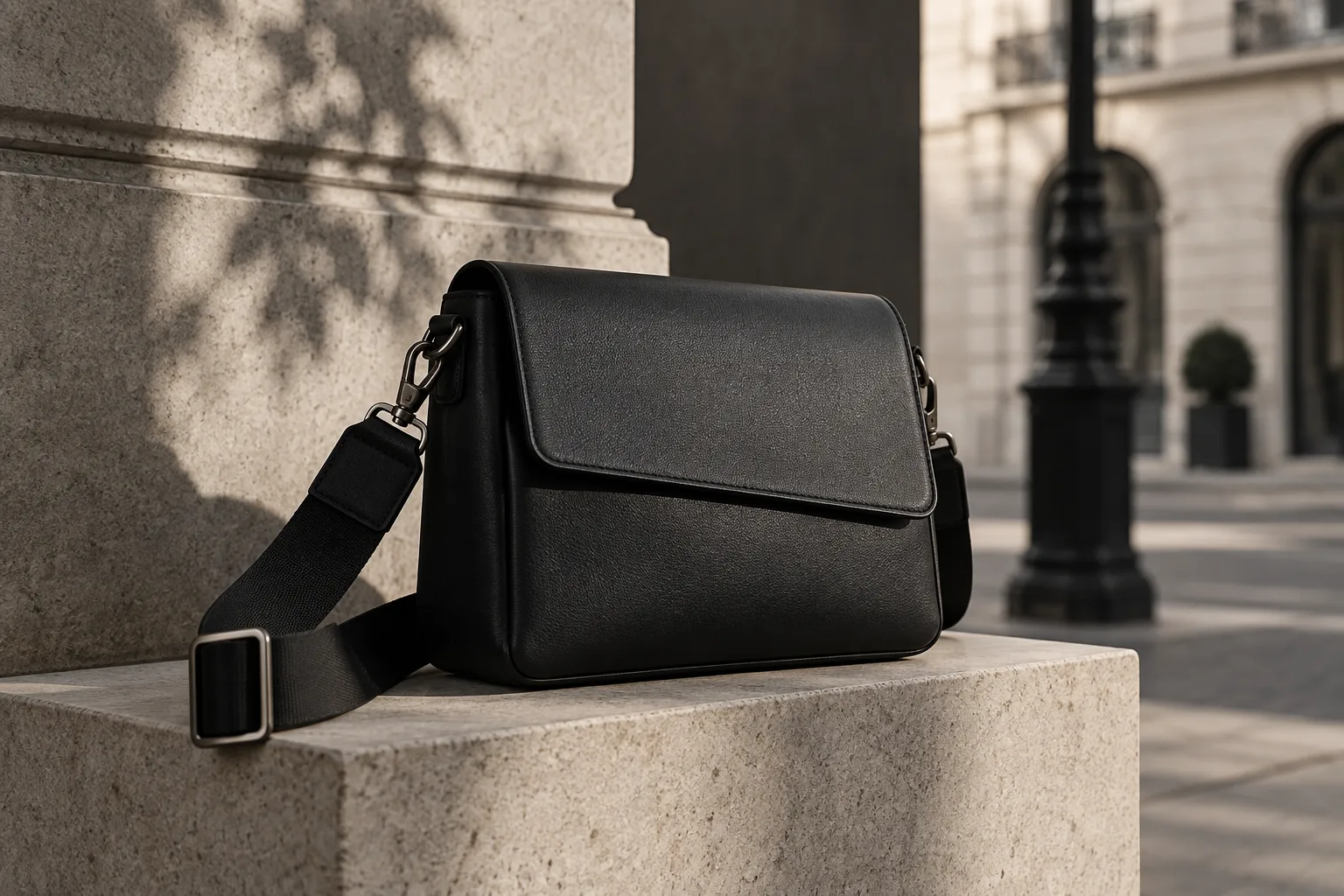
A sling bag works best when its scale balances the outfit. A structured black bag can sharpen relaxed denim and a knit, while a softer bag can temper a tailored jacket. Match the bag's visual weight to the coat or shoes instead of forcing a precise color match. If the bag has a prominent metal detail or contrast panel, keep the rest of the accessories quieter so the outfit has a clear focal point.
Consider weather and movement. A bag used on public transport, at events, or while walking should not swing into the path of your arm or catch on an outer layer. Check whether the opening can be reached with one hand and whether the strap can be adjusted over a coat. Style value is useful, but a compact bag earns its place through repeatable access and comfortable carry.
Verify the current listing before checkout
Before ordering, confirm the exact dimensions, strap range, material, lining, closure, weight, color, availability, delivery estimate, and return terms on the current Karl Lagerfeld listing. Sale and final-sale conditions may differ. Save the product details and order confirmation, especially if the bag is intended for travel or a specific event. Product photographs can change as a color sells through, so the written specification matters.
Care should follow the label for the exact material. Keep the bag away from prolonged moisture, abrasive surfaces, and overloaded straps unless the manufacturer says otherwise. Store it with the shape supported and hardware separated from delicate clothing. The practical conclusion of this Karl Lagerfeld sling bag guide is to choose a carry profile that fits your body and routine first, then use finish and branding as the final tie-breakers.