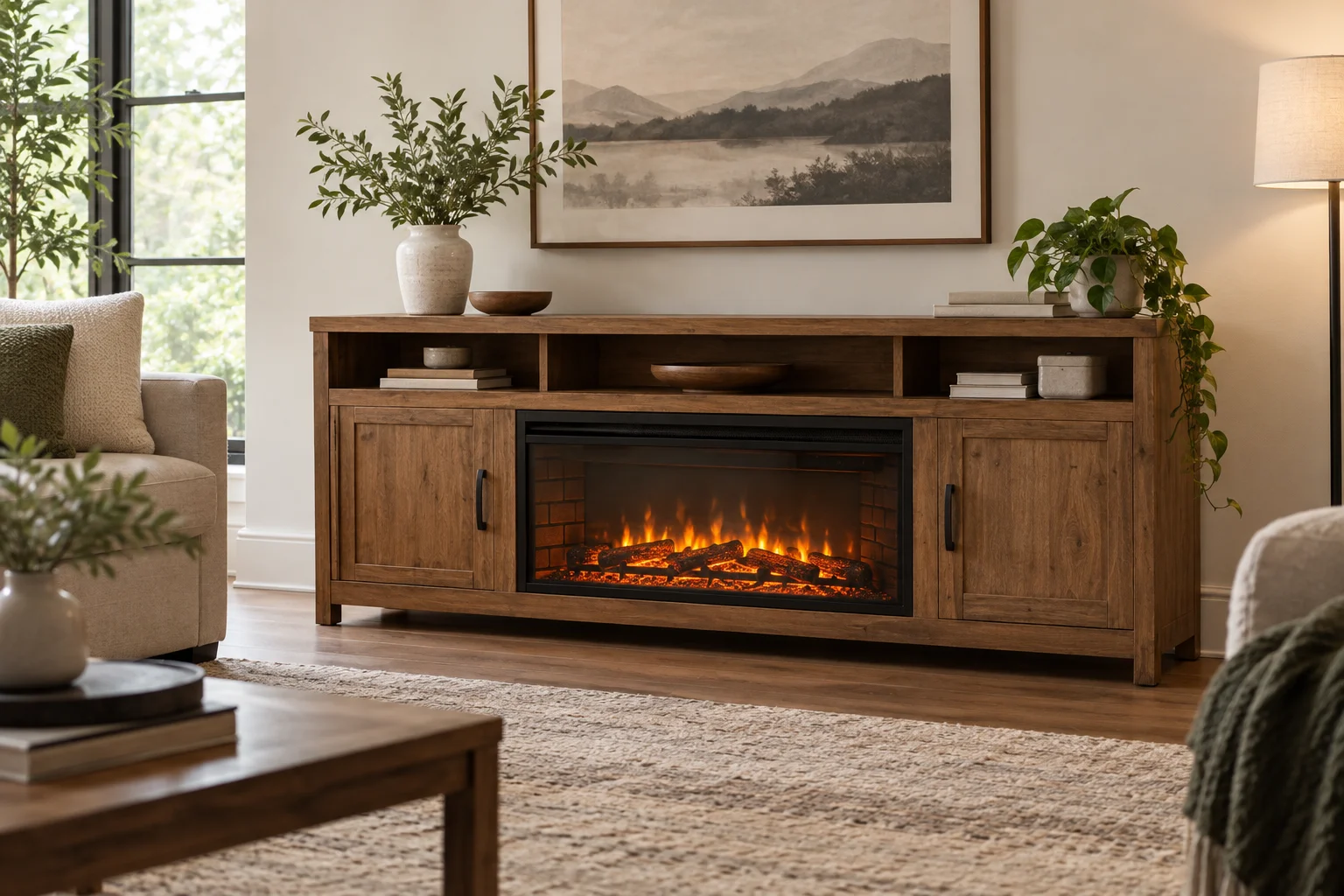
Start with the wall, television, and room
A wooden TV stand with fireplace combines a media console, storage cabinet, and electric heating feature in one footprint. Its usefulness depends on the room more than on the product photograph. Measure the wall, baseboard, outlets, windows, doors, and the distance from the seating position. Mark the stand’s full width and depth with tape so you can see the remaining walkway before you compare finishes.
Record the television’s actual width, stand or mount arrangement, and viewing height. A console can be wider than the screen for visual balance, but the exact support surface, weight rating, and center of gravity still matter. If the fireplace is the visual center, decide whether the screen will sit on the top, mount above it, or use a separate wall solution. These choices affect safety, sightlines, and cable routing.
Also record the room’s fixed constraints before choosing a style. Note the location of outlets, the route to the router, the position of a soundbar, and whether a nearby radiator, register, or window changes the usable wall. A fireplace insert adds another service point, so leave enough space to reach the controls and unplug the unit when needed. The console should solve the media layout without turning routine cleaning, cable changes, or seasonal furniture moves into a dismantling project.
Check dimensions beyond width
Listings emphasize overall width, yet height, depth, shelf opening, and door swing determine whether the furniture works every day. Measure the depth of the television, soundbar, game console, and streaming devices, including cable bends behind them. A shallow console may look neat and leave more walking space, but it can force plugs or devices into a cramped position.
Check the clearance above the fireplace opening and the distance from the front edge to the seating area. Confirm the leg or plinth height against rugs and baseboards. If the furniture has doors, drawers, or lift-up panels, draw the open positions on the floor. A stand that technically fits can still block a vent, collide with a coffee table, or make storage inaccessible once the room is furnished.
Understand the fireplace insert and heat function
Many fireplace TV stands use an electric insert with a visual flame effect and a separate heat function, but those functions may be controlled independently. Verify whether the flame can operate without heat, whether the heat output has stated settings, and whether the unit includes a thermostat or timer. Do not infer these features from a lifestyle photograph or from the word fireplace in the title.
Read the exact insert specifications, power requirements, control method, and clearance guidance. Check whether the heater is designed to warm the room or only provide supplemental comfort. A built-in unit may have a maximum operating duration, a temperature sensor, or an overheat shutoff. Follow the manufacturer’s instructions and keep textiles, paper, decorations, and cables away from any stated warm-air outlet.
Treat wood construction and finish as specifications
Wooden can mean solid wood, veneer over a manufactured panel, engineered wood, or a combination of materials. Each construction can be appropriate, but the material affects weight, edge durability, moisture response, and assembly. Read the material description for the top, sides, doors, shelves, and back panel instead of assuming the word wooden describes every part equally.
Finish changes both appearance and maintenance. Warm oak, walnut, and painted surfaces react differently to dust, fingerprints, heat, and spills. Look for close-up images of edges, grain direction, joints, handles, and ventilation openings. A darker finish can show dust more clearly, while a textured surface can conceal small marks. Judge the finish against the room’s floor and furniture rather than matching a screen image exactly.
Plan storage for devices and everyday access
Open shelves provide fast access and remote-control visibility; cabinet doors reduce visual clutter and protect devices from dust. Decide which items need airflow, which need a clear signal path, and which can be stored out of sight. Measure the tallest console, speaker, game system, router, and power strip before choosing a compartment. A shelf that is wide enough may still be too short for the equipment that matters.
Cable management should be planned before assembly. Check the number and position of rear openings, whether the back is open or closed, and whether a power strip can be reached without crushing cables. Keep electrical connections accessible for inspection. Do not treat a decorative hole as a complete ventilation solution. Devices that generate heat need the clearances specified by their makers, not merely a tidy appearance.
Position the television and protect sightlines
A low console can place the screen at a comfortable seated height, but the right position depends on the sofa, recline angle, and room layout. Sit in the main viewing position and check whether the screen, soundbar, and fireplace opening align without forcing the neck upward. If the screen is wall-mounted above the stand, confirm the wall bracket, stud or anchor plan, and the space needed for cables.
The fireplace effect can draw attention to the center of the room, so keep the viewing zone visually calm. Avoid placing tall decor where it blocks the screen or the heater outlet. If the stand is in a corner, compare diagonal depth and door clearance, not only the front width. Leave enough room to clean behind the unit and to disconnect the insert if service is required.
Verify stability, heat clearance, and electrical access
A wide console can still tip if it is loaded unevenly or if a television is placed beyond the supported area. Check the stated weight limit, leg or base design, anti-tip hardware, and whether the manufacturer recommends anchoring. Secure the unit according to the instructions, especially in homes where children or pets can pull on doors, cords, or the television.
Keep the heater outlet, power cord, and surrounding surfaces clear according to the manual. Do not cover ventilation slots with baskets or push the stand tightly against a wall if the instructions require a gap. Use the specified outlet arrangement and avoid overloading a power strip. If the plug, cord, or insert arrives damaged, stop assembly and follow the merchant or manufacturer process rather than testing it casually.
Plan delivery, assembly, and returns
Furniture with an integrated fireplace can be heavy and awkward, so measure the route from the delivery point through doors, stair turns, elevators, and narrow halls. Confirm package dimensions, number of boxes, assembly requirements, and whether the fireplace insert arrives installed or separately. A stand that fits the room may still fail at the front door. Keep the path clear before delivery day.
Inspect panels, shelves, doors, hardware, glass, cable openings, and the insert before discarding packaging. Assemble on a protected surface and do not load the television until the base is level and every fastener is seated. Test doors and drawers before final placement. Read the current return policy for assembled or opened furniture, damaged packaging, final-sale variants, and electrical components before beginning.
Final wooden TV stand with fireplace checklist
Before checkout, record overall width, depth, height, top weight rating, television dimensions, fireplace opening, heat output, flame-only mode, controls, power requirements, clearance, material construction, finish, shelves, doors, cable openings, ventilation, anti-tip plan, package dimensions, assembly, delivery, warranty, and returns. Compare the list with the actual room and equipment, not with a staged image.
The best wooden TV stand with fireplace fits the wall, supports the screen, stores the equipment, and leaves the heating feature accessible and correctly ventilated. Choose the console around the room’s measurements, the insert around its verified manual, and the finish around the maintenance you will perform. Confirm current specifications and policies on the product page before buying.


