
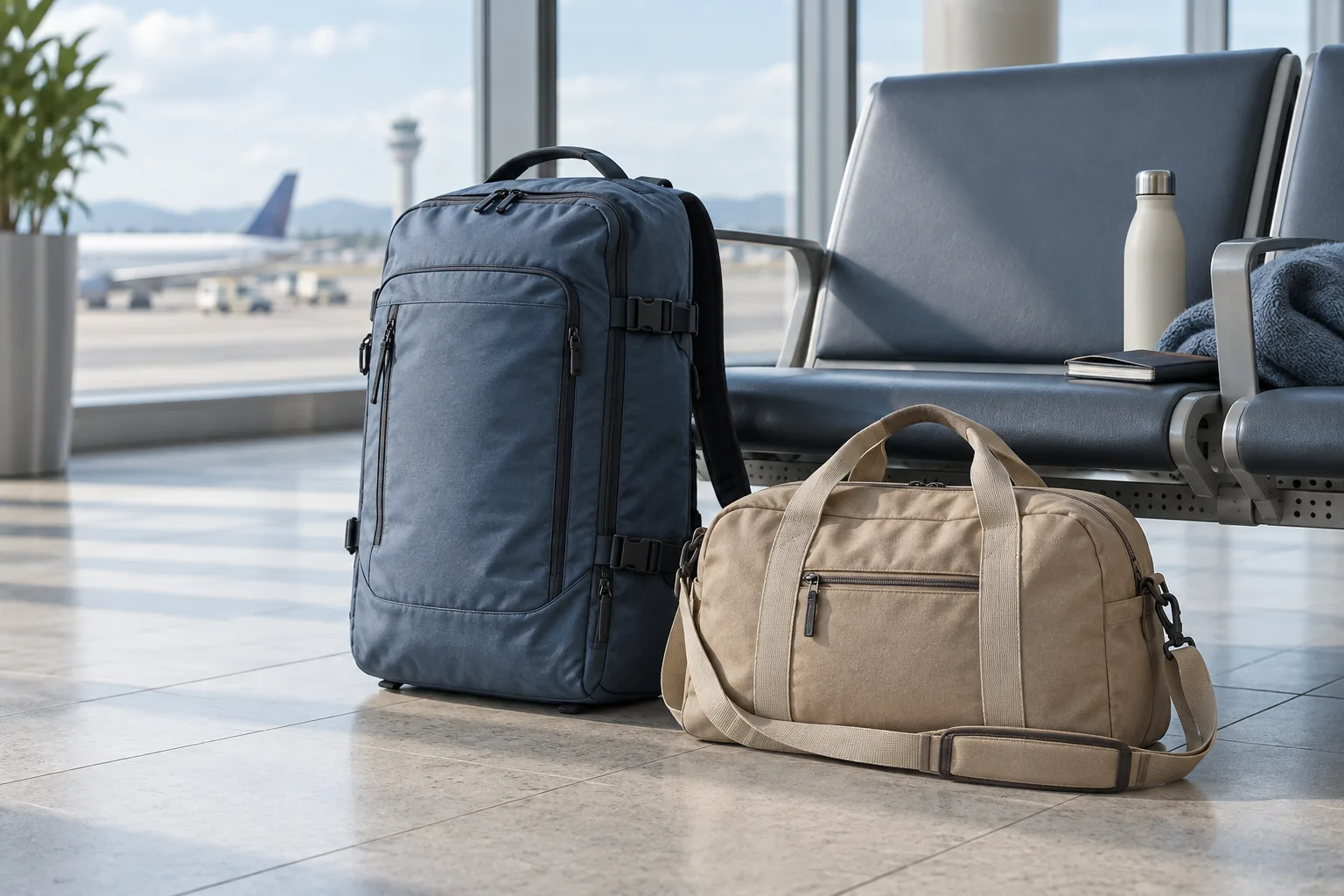
Choose the bag around the trip
The phrase “Kipling travel bags” can describe a compact personal bag, a weekender, a backpack, a soft suitcase, or a larger checked piece. Start with the trip rather than the collection name. Count the nights, the clothing volume, the shoes, the weather layer, and the items that must stay accessible in transit. A small bag is efficient when the packing list is controlled; a larger bag becomes useful only when its weight and handling remain practical.
Airline rules also change the decision. Check the current carrier dimensions and weight limits for the route you are taking, then compare them with the packed bag rather than trusting a general “carry-on” label. A soft-sided piece may fit into a measuring frame more easily than a rigid case, but overpacking can remove that advantage. Leave room for the bag to close without stressing the zipper or seams.
Measure packed capacity and access
A bag's listed volume is only useful when you understand how that space is divided. Check the main compartment opening, lining, compression panels, shoe pockets, laptop sleeves, and external pockets. A split interior can keep shoes away from clothing but may make bulky layers harder to pack. A wide opening is convenient for a weekender, while a top-loading backpack may use space efficiently but hide items at the bottom.
Test the packing sequence before buying. Place the largest folded item, then the shoes and small accessories, and imagine removing one item at an airport without unpacking the entire bag. Look for zippers that open far enough to see the interior and pulls that can be used with cold or tired hands. The practical capacity is the amount you can reach, close, and carry without fighting the structure.
Compare carry modes and load transfer
Travel bags become uncomfortable when their carry mode does not match the distance between transport points. A backpack should place the load close to the body and offer straps that adjust to your torso. A shoulder bag needs a strap wide enough for its expected weight and attachment points that do not twist. A wheeled bag needs a handle that extends cleanly and a base that does not wobble when the bag is turned.
Check how the bag behaves when partly full. Soft luggage can slump or shift, which may be comfortable for storage but awkward for a crowded terminal. Compression straps and a structured base can stabilize the shape. If the bag has several carry options, make sure unused straps can be tucked away or secured. Loose webbing catches on seats, belts, and other luggage at exactly the moment you need a quick transition.
Inspect fabric, zippers, and high-wear points
Fabric influences weight, abrasion resistance, cleaning, and the way the bag handles rain. A coated textile may resist light moisture, while a standard woven fabric may need a cover or careful drying. Compare the bottom panel, corner reinforcement, handle attachment, and seam binding. Those areas absorb the stress of floors, car trunks, and repeated lifting. A light fabric is useful only when the rest of the construction supports the intended trip.
Zippers deserve a close look because they carry repeated force when a bag is full. Check the opening direction, the number of sliders, the ability to lock or secure the pulls, and whether the teeth appear protected by a storm flap. Exterior pockets should close without pressing against the contents. Do not pack past the natural shape of the bag; a zipper that is forced around an overfilled corner will age faster than the fabric suggests.
Build an organization system you will maintain
Compartments help when they reflect your travel habits. Use one area for clothing, one for footwear or laundry, and small pockets for documents or chargers. Too many compartments can fragment the space and encourage duplicate packing. Packing cubes may improve flexibility when the main compartment is open, while built-in dividers can reduce the need for extra organizers. Choose the system that remains understandable when you are tired and in a hurry.
Keep critical items accessible without placing them in a vulnerable outer pocket. Passport, medication, keys, and a phone should have a predictable location. Consider whether a pocket is exposed when the bag is worn or placed under a seat. Organization is part of security and not only a neatness preference. A good travel bag reduces the number of times you need to open the main compartment in public.
Check care, storage, and current policy details
Before checkout, confirm the exact dimensions, empty weight, fabric, capacity, carry modes, warranty, availability, delivery, and return terms on the current Kipling listing. Compare the bag with the carrier rules for the route you will actually fly. Save the product page and order information. If the trip is close, allow time to pack the bag at home and exchange it if the capacity or fit does not work.
Follow the manufacturer's cleaning instructions. Empty all pockets before wiping, avoid high heat unless the care label permits it, and dry the bag fully before storage. Do not leave it compressed under a heavy load for long periods if the structure depends on foam or flexible panels. The right choice from the Kipling travel bags collection is the bag that carries your real packing list, fits the transport rules, and remains easy to maintain after the trip.